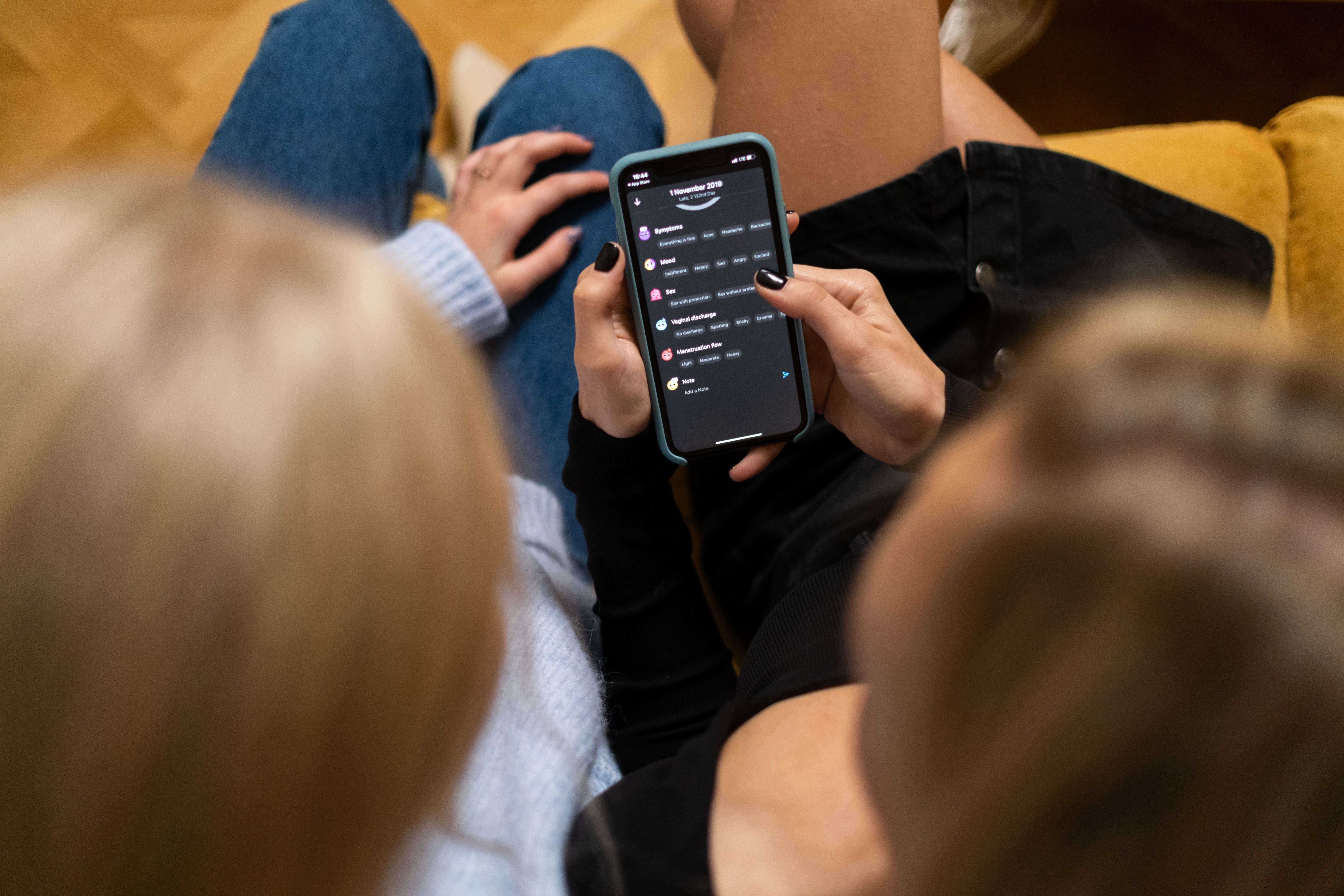
Supernormal Stimuli: Examining Collapsing Fertility Rates Through How A Smartphone Is Like A Newborn Infant
Supernormal stimuli is the concept that animals and humans can be made to prefer an artificial stimulus with exaggerated features over the same stimulus in normal proportions. Essentially, supernormal stimuli hijacks autonomic responses, reliably causing aberrant and even maladaptive behavior. This includes commandeering procreative impulses, steering them towards disordered behavior that can essentially waste those impulses on meaningless activities while the animal or human is within their natural mating period window (seasons for most animals, childbearing years for human females). If these windows pass and the animal or human has only been engaging with the artificial stimulus, then it has in essence denied itself the chance to procreate, and relegated itself out of the gene pool.
“Animals, including human beings, tend to respond more strongly to stimuli that are associated with the highest relative rewards.” (EUROPEAN JOURNAL OF ENTOMOLOGY)
Fertility rates have been and are falling around the world. The birth rates are calculated in decimals, which I’ve always found off-putting, but ignoring my own instincts to puerile humor regarding how women are only having .1 of a baby, the replacement birth rate for every human female to just maintain most populations seems to be 2.1 children per women. So-called “fertility crises” are when the birth rate number falls below that level, and it is that case that even in countries that once had fertility rates recklessly crossing the midway point to 10 (think 5 children per women and above), and while global birth rates have been falling since the 1950s, those falling birth rates now seem to be rapidly accelerating everywhere.
There are currently, by best estimates, 8 billion people in the world. There are also, by some estimates, around 7.5 billion active smartphone users, with some estimates reporting more than even recorded human population. Smartphones have become ubiquitous across cultures, time, and place in a way that nothing else in recorded human history has. What is interesting is that this so-called “sudden” acceleration in decline in global fertility rates seems to have begun in the mid-2010s, a few years into the full swing of global smartphone adoption that now dominates most of human life.
We will now list off all the ways a smartphone is like a newborn infant.
A smartphone is:
- Small, able to be cradled in the hand.
- Must be fed daily (charged), through a cord, which in some ways resembles an umbilical cord.
- Makes random, incomprehensible babbling noises through notifications, signaling to you that it needs your attention.
- Rubs and gently prods you through haptic buzzing vibration, also to signal it needs your attention.
- Has protective covers that it needs to wear like swaddling clothes.
- Gets dirty and needs to be cleaned. Screens themselves have been tested and found to be often covered in fecal matter that needs to be periodically wiped away, usually with wet wipes. Protective cases need to be removed and swabbed, like a diaper.
- Has the ability to be trained to have set sleep times.
- Can and very often does wake you up at odd hours of the night, calling for your attention, even when and if you’re trying to enforce those sleep times.
- Can show you a constant feed of the most basic expressions of human emotions through social media.
- Manipulates you into giving you more of its attention, time, and resources.
- Capable of showing you love as a conduit for third-party messages, like Direct Messages from strangers on social media that only serve the function of expressing affection and often fixation on you, the user (i.e. “simping” Direct Messages).
- Contrarily, can demonstrate irrational frustration or hostility towards you for periods of time for seemingly no predictable, discernible reason through that same social media (i.e. sudden hostile Direct Messages).
It is important to note that a smartphone never grows or changes. It is perpetually like a days-old newborn infant, if it is like one at all. While features can be added or upgraded, a plateau seems to have been reached in the form of a smartphone.
It is a known fact that directly after a women gives birth her hormone levels change drastically. Estrogen and progesterone collapse from the highest possible elevated levels only a day before down to practically zero. After childbirth women are naturally averse to new mating for a time as they heal and recover from the birthing process.
While I have no data to offer today demonstrating hormonal levels in women who use smartphones daily and those who do not possess them at all, I would like to posit the theory that smartphones put humans—both men and women—into a perpetual state of believing that they have just received a newborn infant that is now in their care. While men must also have natural biological and psychological processes that they go through during the birth of a new child, the affects of a smartphone in this case on women is of far more interest in the investigation of rapidly declining birth rates. It could be the case that, hormones aside, the immaterial psychological process that cannot be as easily measured quantitatively would also be of paramount interest. A newborn infant must cause many psychological changes to a parent receiving them. A newborn infant is a new family member, a new competitor for resources that must be taken into account and integrated into the overall dynamic family structure. While physical recovery processes naturally dissuade a female from wanting to re-engage in reproductive behavior directly following the birth of a new offspring, the psychological recalibration must also be taken into account. In the case of a perpetual newborn infant, even if it is never resolved, supernormal stimuli can hijack a sense of space and time.
The most well-known examples of supernormal stimuli help illustrate this. In one case, researchers observed that birds would often prefer brooding over fake eggs that were larger and with brighter colors than their own, even to the point of sliding off of eggs that were too big for them to cover. What this means in effect is that birds could lay their own eggs and be made to abandon them for fake eggs made of plaster. This obviously means the birds own eggs would never be incubated, and therefore die. Eventually, if the bird also died while attempting to brood over the fake plastic eggs, then it would have been in essence tricked into never producing its own offspring, removing itself and the generations it could’ve born from the potential gene pool.
Another example involves butterflies. Many butterfly species have strong visual sight, and mate through visual cues of bright color and patterning. The brighter and more complex the color patterning, the more desirable the mate. In these cases, researchers were able to get a male butterfly to prefer mating with a piece of brightly colored orange cardboard over actively present females. The result in this case would the be same, the wasting of the male butterfly’s life and reproductive window, undone by a siren song of dead colored paper.
What I would like to put forward today is a theory that the sudden accelerating collapse in global fertility rates can be explained by smartphones universally acting as supernormal stimuli that interrupts the natural human reproductive cycle. Smartphones create a perpetual, never-ending newborn infant that overrides natural human instincts so that the human unconsciously comes to believe, and act, as if they have just recently received a new baby in their care. This perpetual moment of artificial new life makes people naturally avoid procreation, believing unconsciously that a newborn infant is already in their care, and therefore new mating behavior should be put off and avoided until the newborn is properly integrated into the family environment. This happens over time, as a single elongated moment, and because the smartphone never grows or changes, the moment can last for far longer than a real newborn infant would be in the same state for far less time. A newborn infant becomes a baby, that becomes a toddler, a child, teen, and so on. A smartphone mimicks a newborn infant today, tomorrow, and perpetually, as long as its connected to an internet network and electricity.
I present this theory as a beginning of a conversation, with hopes that some other intrepid researcher out there could create the studies necessary to prove or disprove it. Untethered internet should be considered one and the same in all discussions of its expression in the world as smartphones, but this I cover in other essays in-depth.
Until more studies are done and made public, all I can offer are my theories, and the mystery of globally collapsing birth rates will remain.
[If you have any ways you think a smartphone is like a newborn infant, email me at flavius_gaius@proton.me and I’ll consider adding them with your citation.]